
They’ve taken a step. Help them make it count.
A student sharing a maths resource with you may be asking a bigger question than whether an app looks useful. They may be asking whether the grade they need is still within reach, and what they should do next.
Perhaps they follow explanations in lessons but struggle to begin unfamiliar questions. Perhaps a mock has exposed gaps they do not know how to repair. With a university offer or intended course in mind, those gaps can start to feel like a threat to the next year of their life.
Missing a required grade can mean changing plans, and for some students another year preparing and reapplying. It does not automatically mean a delayed start: there may be other admissions routes, including Clearing. UCAS sets out the options.
Your response can bring that anxiety back to something the student can act on. Which topic needs attention? What would better understanding look like? What will they attempt before you next meet?
MathLab gives them a structured place to carry out that practice.
Give their next study session a clear purpose.
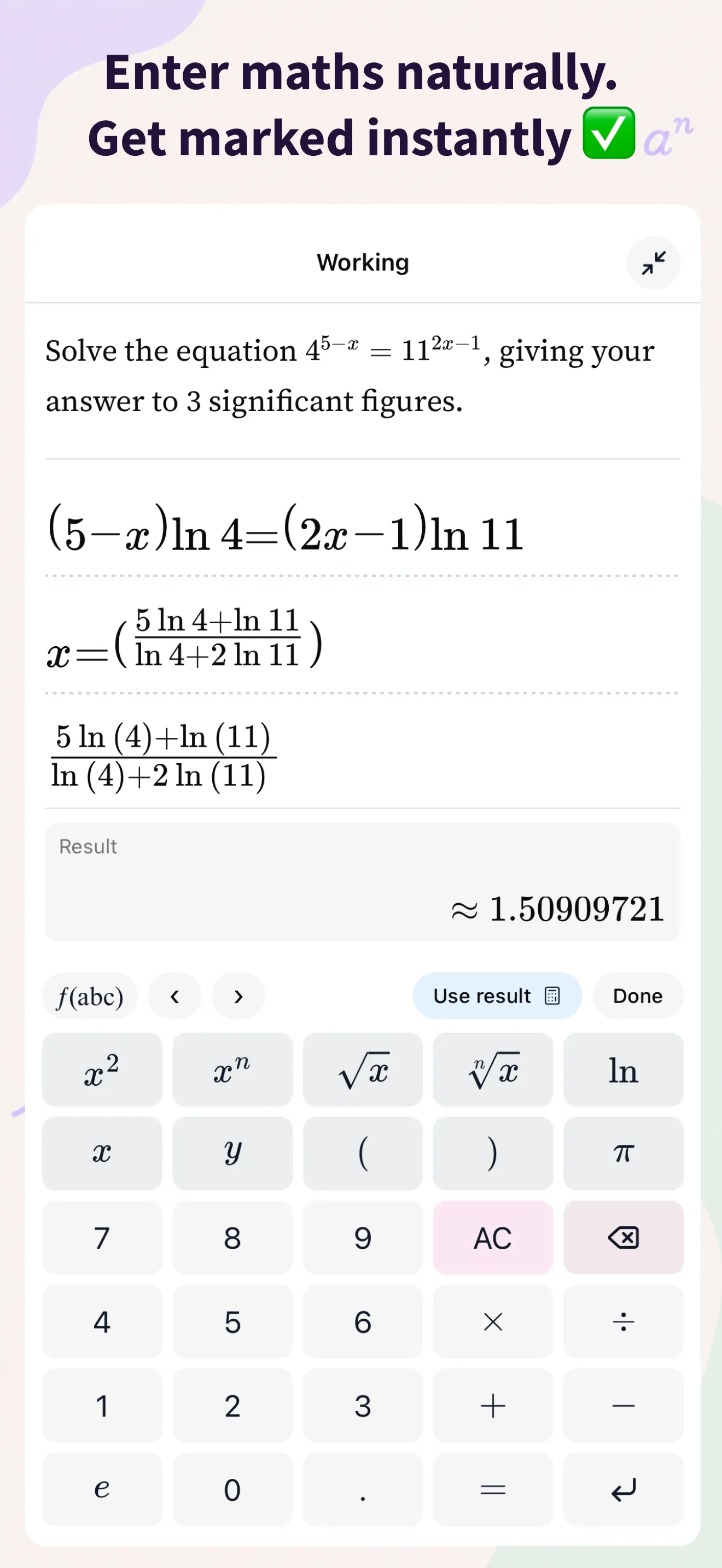
Students need to know what “work on your algebra” means when they sit down alone. MathLab organises lessons, questions and worksheets into learning paths and milestones, helping them find a next step and keep a record of completed work.
A useful between-lesson routine is simple:
- Choose one specific focus. Select a topic that matches the lesson or a prerequisite gap you have identified.
- Ask the student to attempt relevant questions before opening a solution, keeping written working where appropriate.
- Have them compare their method with the worked route and record the point at which their reasoning changed.
- Bring one unresolved question back to you, then attempt a fresh problem to check whether the learning transfers.
For example, a student repeatedly losing track of signs in algebra needs practice with that step, alongside opportunities to explain their choices. “Complete this topic and bring me an error you understand better” gives a session a purpose and a useful endpoint.
MathLab provides supported answer checking, hints and worked solutions. Your knowledge of the student helps determine where those resources will be most useful.
Inspect the questions. Follow the solutions.
The public catalogue lets you examine the material before recommending it. Start with a topic you teach, read a lesson and follow the practice sequence. Check the content, notation and level against your students’ course and your exam board specification.
The catalogue totals above include foundation, A-level and further material. They describe the available resources, rather than an expected workload for one student. A student struggling with one prerequisite needs a well-chosen starting point, not an instruction to finish everything.
Try the lesson on completing the square, then use the curriculum roadmap to inspect the surrounding progression. The features and pricing page explains the student workflow, including answer entry and milestone-based progress.
Automatic checking applies to supported answers. You will still want to assess reasoning, communication, method marks and exam technique through students’ written work. Encourage them to keep the working that led to an answer, especially when the answer is wrong.
The evidence behind purposeful practice.
The EEF’s average estimate for feedback approaches across its wider research base. Feedback evidence.
The EEF’s average estimate for metacognition and self-regulation approaches. Metacognition evidence.
These estimates concern educational approaches across studies. They are not results from a MathLab trial, A-level-specific predictions or additive effects. The EEF also reports variation by context; digital feedback has a lower average estimate than feedback overall.
The relevant design principle is giving students opportunities to act on feedback and explicitly plan, monitor and evaluate their work. A worked solution becomes more useful when the student identifies a mistake and tests the corrected method on another question.
Model that process when introducing the resource. Ask the student why they selected a topic, where their attempt became uncertain and what evidence would persuade them they understand it. MathLab can support the practice routine; the teaching around that routine still matters.
Judge progress by what they can do independently.
MathLab tracks completed questions, worksheets and milestones. Treat that as a record of practice to discuss with the student. Pair it with evidence of independent performance.
| Evidence | Useful interpretation | Follow-up |
|---|---|---|
| Completed worksheet | The student has worked through that material | Ask which item challenged them |
| Correct answer after reviewing a solution | They may now follow that route | Set an unseen problem with a related method |
| An error explained accurately | They can identify a specific issue | Check whether it recurs in later work |
| Independently marked, timed exam work | Evidence about performance under exam conditions | Review reasoning, accuracy and time use |
The current grade is a starting point for the conversation. In the MathLab founder’s story, a teacher saw meaningful progress in a D that the student experienced as failure. That recognition helped him continue. He later achieved an A after substantial further study and tutoring, before MathLab existed.
A student needs both an honest account of the remaining gap and a reason to believe the next piece of work is worthwhile. Specific evidence lets you offer both.
Try it with one student and one topic.
A two-week check gives the student a manageable commitment and you a concrete basis for discussing usefulness. This is a suggested evaluation routine, not a validated intervention schedule.
At the start: agree on a narrow topic and use a short independent task to identify the difficulty. Keep the working, not just the score.
During practice: ask the student to use the relevant lessons and worksheets, noting questions they could not resolve. At your next conversation, review one of those questions and agree what to try next.
At the end: use a different task of comparable difficulty, completed without hints. Compare the method, errors and level of help needed. A small set can guide the next teaching decision; it cannot establish a predicted grade or prove that the app caused a change.
Students can begin with free lessons and catalogue access, plus a starter allowance of answer submissions. Pro’s planned standard monthly price is £19.99, with a 50% introductory launch offer at £9.99 per month. The annual plan’s planned standard price is £159.99, with a 50% introductory launch offer at £79.99, billed upfront through Apple. Apple confirms local prices, offer eligibility, duration and renewal terms before purchase. Review current pricing and terms before discussing a subscription. Keep the initial recommendation specific enough that the student can begin with the free resources.
Start by opening a topic together. Give their willingness to improve a clear task, a time to return to it and someone to discuss it with.
Your questions, answered.
How can I use MathLab alongside my lessons?
Choose a relevant topic, ask the student to attempt practice independently and have them bring an unresolved question or error to your next conversation. Match the selection to your teaching sequence and the student’s current needs.
Which parts of maths does MathLab cover?
The catalogue includes foundation work, pure mathematics, statistics, mechanics and further content. The public roadmap lets you inspect the available topics and progression. Check the specific material against your exam board specification and teaching plan before recommending it.
Does automatic marking assess a student’s full reasoning?
MathLab checks supported answers. That should not be treated as a complete assessment of written reasoning, method marks or exam technique. Review students’ working and use independently marked exam questions alongside app practice.
Do students have to subscribe to begin?
No. Students can browse the catalogue and read MathLab Learn for free, with a starter allowance of answer submissions in the app. Pro adds more submissions and progress tracking across the full course. Current prices and subscription details are on the pricing page and in the App Store.
Research checked September 2026. Research estimates describe educational approaches, not measured outcomes from using MathLab.